History
1640
Our history goes back the 1640s when Gustav Gabrielsson Oxenstierna and his wife Maria de la Gardie inherited two manors and several other farms in Värmdö from the crown. They needed bricks to build the stone house required for the estate. A brickworks was established in Farsta bay. Gustav Gabrielsson Oxenstierna died before the building was completed. To honour his memory, Maria de La Gardie renamed the estate Gustavsberg.
1825
At this time Gustavsberg/Farsta was owned by the wholesaler Johan Herman Öhman. The 200 year old brickworks were closed and in 1825 Öhman requested of the Board of Trade that he be permitted to "establish and run a factory for the production of porcelain".
Around the middle of the nineteenth century, Gustavsberg moved into producing their products in the English style. In 1839 the anchor symbol was introduced to mark the transformation. For over 100 years Gustavsberg mainly manufactured domestic porcelain and decorative goods. Under the leadership of the owner Gustav Odelberg the ground was laid for the large company that Gustavsberg had become by the end of the century.
1920
In 1920 Gustav Hedblom planned the opening of his own factory for the manufacture of taps. His idea came to fruition; before long he and two colleagues had set up business. Vårgårda Armatur was born. By 1922 the company had expanded to 38 employees, who could proudly point to a wide range of products and sales of 66, 550 SEK.
1939
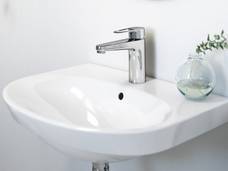
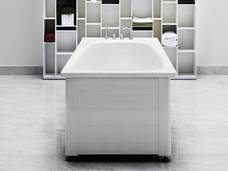
A new factory for the manufacture of sanitary ware was completed. WCs and wash basin were manufactured here. In 1947 bath manufacture was added to production. In 1993 the manufacture of baths was moved to the partner company Bette GmbH in Germany.
1987
Gustavsberg purchased Vårgårda Armatur, whose product list includes taps for every household requirement and a system of connections and ball valves for the plumber.
1991
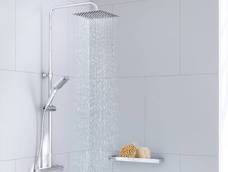
Gustavsberg purchased Koralle, a leading figure in the European shower market.
1994
KF Industri/Nordico, the parent company, decide to sell Gustavsberg to the Dutch company N.V. Koninklijke Sphinx.
2000
Villeroy & Boch AG have bought AB Gustavsberg from the Finnish sanitary ware manufacturer Sanitec (IFÖ and IDO in Scandinavia). The purchase includes AB Gustavsberg and subsidiaries Gustavsberg VVS AB, Gustavsberg Vårgårda Armatur AB and the marketing organisations in Sweden, Norway, Denmark, Finland, Russia, the Ukraine and the Baltic states.
Villeroy & Boch
The company was formed in 1748 and has one of Europe's best known trademarks within the sanitary ware branch as well as in the tile and domestic chinaware markets.
1640
Our history goes back the 1640s when Gustav Gabrielsson Oxenstierna and his wife Maria de la Gardie inherited two manors and several other farms in Värmdö from the crown. They needed bricks to build the stone house required for the estate. A brickworks was established in Farsta bay. Gustav Gabrielsson Oxenstierna died before the building was completed. To honour his memory, Maria de La Gardie renamed the estate Gustavsberg.
1825
At this time Gustavsberg/Farsta was owned by the wholesaler Johan Herman Öhman. The 200 year old brickworks were closed and in 1825 Öhman requested of the Board of Trade that he be permitted to "establish and run a factory for the production of porcelain".
Around the middle of the nineteenth century, Gustavsberg moved into producing their products in the English style. In 1839 the anchor symbol was introduced to mark the transformation. For over 100 years Gustavsberg mainly manufactured domestic porcelain and decorative goods. Under the leadership of the owner Gustav Odelberg the ground was laid for the large company that Gustavsberg had become by the end of the century.
1920
In 1920 Gustav Hedblom planned the opening of his own factory for the manufacture of taps. His idea came to fruition; before long he and two colleagues had set up business. Vårgårda Armatur was born. By 1922 the company had expanded to 38 employees, who could proudly point to a wide range of products and sales of 66, 550 SEK.
1939
A new factory for the manufacture of sanitary ware was completed. WCs and wash basin were manufactured here. In 1947 bath manufacture was added to production. In 1993 the manufacture of baths was moved to the partner company Bette GmbH in Germany.
1987
Gustavsberg purchased Vårgårda Armatur, whose product list includes taps for every household requirement and a system of connections and ball valves for the plumber.
1991
Gustavsberg purchased Koralle, a leading figure in the European shower market.
1994
KF Industri/Nordico, the parent company, decide to sell Gustavsberg to the Dutch company N.V. Koninklijke Sphinx.
2000
Villeroy & Boch AG have bought AB Gustavsberg from the Finnish sanitary ware manufacturer Sanitec (IFÖ and IDO in Scandinavia). The purchase includes AB Gustavsberg and subsidiaries Gustavsberg VVS AB, Gustavsberg Vårgårda Armatur AB and the marketing organisations in Sweden, Norway, Denmark, Finland, Russia, the Ukraine and the Baltic states.
Villeroy & Boch
The company was formed in 1748 and has one of Europe's best known trademarks within the sanitary ware branch as well as in the tile and domestic chinaware markets.

(